

Day Two at ALC: Justice, Resilience, and Thriving Black Leadership

If Day One of the Congressional Black Caucus Annual Legislative Conference reminded me of my power, Day Two reminded me of my responsibility. It was a day layered with truth-telling, history, vision, and accountability. Each panel was a mirror to a different part of our struggle and our brilliance: thriving in workplaces that were not built for us, the ongoing assault on democracy, and the living memory of surviving systems designed to break us.

I walked away from these conversations, reminded that my impact cannot be limited to the roles I hold—it must be measured by the way I stand in the gaps, amplify what needs to be said, and align myself with leaders who not only talk about change but live it.
Panel One: Company Men
“Thriving as Black Professionals in the Workplace”
If the first day was about reclaiming my personal sense of power, this panel opened Day Two by clarifying how that power must manifest in professional spaces. Hearing Mr. Justin Grant, Dr. Paul Miller, Mr. Joshua Herbert, and Dr. Roger Mitchell speak about thriving as Black professionals was both affirming and challenging.
What struck me most was the way they talked about non-negotiables. Too often, Black professionals are told to sacrifice our health, our peace, and our wholeness for a seat at the table. This panel flipped that narrative. They reminded us that success without health is not success—it’s slow destruction.
Dr. Roger Mitchell spoke candidly about what some call “CEO Belly”—the dangerous weight gain, stress-related health issues, and physical toll that leadership can take, particularly on Black men. He reminded us that the body keeps the score, and if we don’t set boundaries, stress will cash checks our bodies cannot afford.
Dr. Paul Miller named stress as a silent killer of Black leadership, pointing to the way constant pressure, discrimination, and overwork erode not just longevity but legacy. And yet, they reminded us that thriving means setting standards that protect our humanity: protecting rest, prioritizing wellness, refusing to let titles become chains.

Justin Grant and Joshua Herbert also pushed the conversation toward financial health, arguing that thriving professionally cannot be divorced from building a strong financial portfolio. To simply earn is not enough; we must learn to invest, diversify, and create wealth that extends beyond us. Financial acumen is not just about personal gain, but about modeling stewardship and building security for future generations.
As I listened, I reflected on my own journey—my time in government, academia, nonprofit leadership, and now in spaces where culture and strategy intersect. This panel reminded me that thriving as a Black professional is not about assimilation but about transformation. It is about protecting health as a non-negotiable, resisting the lure of burnout, and ensuring that financial stability is not an afterthought but a pillar of resilience. Thriving means refusing to trade away our bodies, our peace, or our future to prove our worth.
Panel Two: The Judiciary Braintrust
“The Supreme Court’s Assault on Democracy: The Voting Rights Act and DEI on Life Support, Mid-decade Redistricting, the 2026 Elections, and the Future of Justice and Equality for Black People in America”
If the first panel was about thriving in professional spaces, the second was about protecting the very democracy that makes those spaces possible. To hear Representative Wesley Bell, Mr. Christopher Bruce, Former Assistant Attorney General Kristen Clarke, Elie Mystal, and Maya Wiley collectively dissect where we are was sobering—and necessary.
There is a temptation in America to pretend that democracy is fixed, that the progress of the Civil Rights era secured the foundation once and for all. This panel reminded me that the very pillars of that foundation—the Voting Rights Act, affirmative action, the protection of representation—are being chipped away, brick by brick. When Elie Mystal said plainly that the Supreme Court has not been a neutral arbiter but an active participant in rolling back protections for Black people, it forced the room to sit in an uncomfortable truth: progress without vigilance is regression.
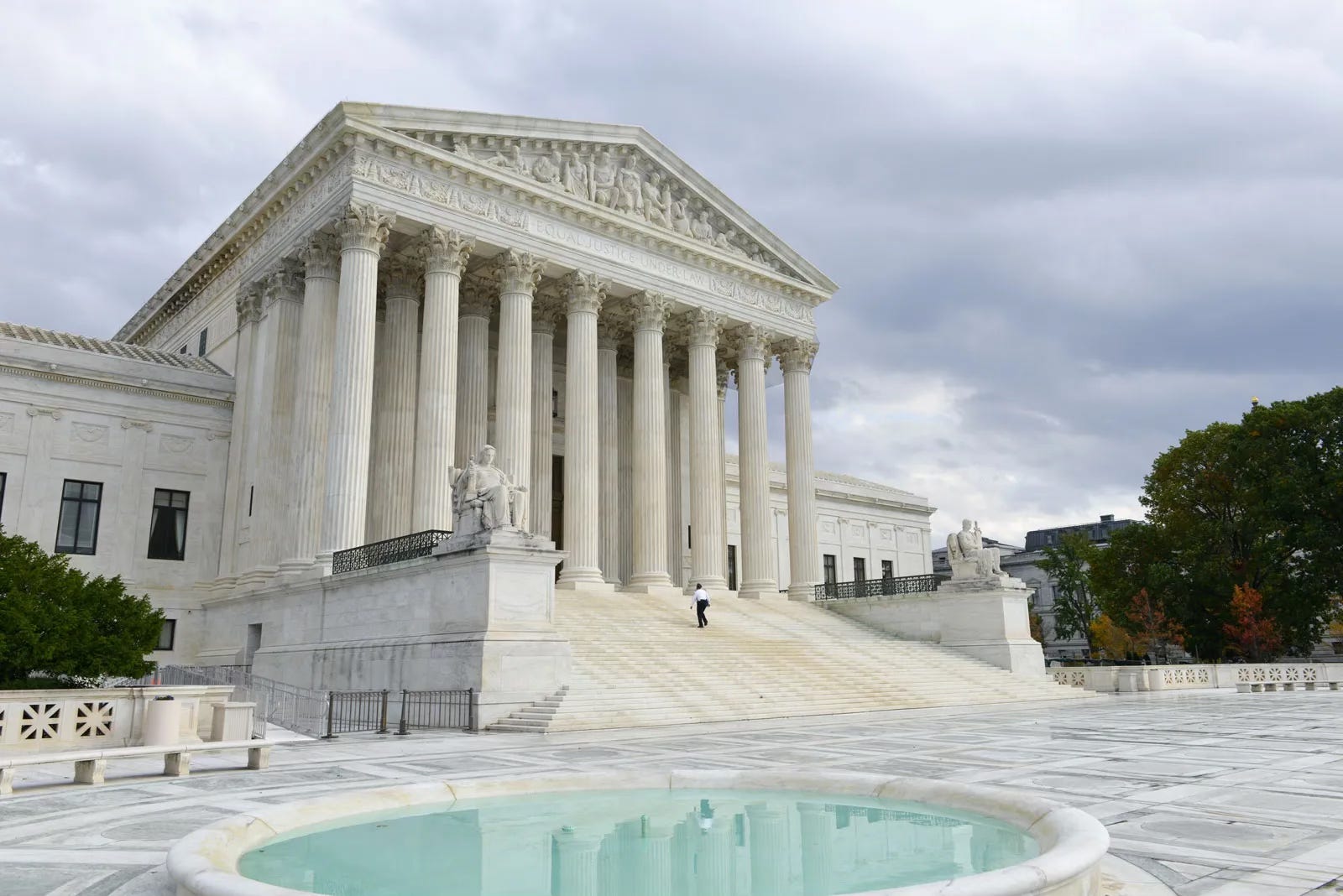
Kristen Clarke’s reflections resonated deeply with me. Having served at the highest levels of the Justice Department, she spoke not just with analysis but with lived authority. The Voting Rights Act, once a shield, is now treated as optional. DEI—once framed as a path toward fairness—is now on life support. Mid-decade redistricting threatens to mute our voices before the 2026 elections even arrive.
And yet, Maya Wiley reminded us of something critical: even when the law bends against us, the people still have power. Systems may try to silence, but collective organizing, storytelling, and strategic action remain tools that cannot be stripped by legislation.
I left that panel carrying the weight of reality, but also the clarity of calling. Justice is not a spectator sport. To sit in that room was to be reminded that my role—as a strategist, scholar, and leader—is to ensure our communities not only understand what is happening but are also equipped to act.
Panel Three: Katrina 20
“We Survived the Storm—Did We Survive the System?”
This panel was nothing short of historic. To sit in a room with General Honoré, Representative Troy A. Carter Sr., Representative James E. Clyburn, and Norman Robinson was to sit in the presence of living testimony.
Katrina was not just a natural disaster; it was a human one. The storm revealed what happens when systems already diseased by racism, classism, and neglect are tested. The question—“Did we survive the system?”—hung heavy in the room.
General Honoré spoke with the authority of someone who lived the chaos and carried the burden of response. Representative Carter and Representative Clyburn placed the disaster in the broader context of political will and systemic neglect. And Norman Robinson, as a journalist and witness, reminded us of the role truth-telling plays in demanding accountability.

What struck me most was the reminder that disasters are never just about weather. They are about preparation, response, and recovery—and all of those are filtered through systems of inequality. Katrina survivors endured the storm, but too many were left to survive the aftermath on their own. Twenty years later, the scars remain visible, and the lessons continue to be debated.
For me, the panel was not just about remembering a tragedy; it was about understanding the concept of resilience. Black communities have always had to be both victims and first responders. We bury our dead, rebuild our homes, and demand justice, all while being told to be patient. And yet—we are still here.
A Day of Lessons Interwoven
Together, these three panels formed a tapestry of justice, resilience, and leadership. From the workplace to the judiciary to disaster response, the message was clear: survival is not enough. We must thrive, we must build, we must fight for systems that not only accommodate us but also honor us.
Day Two reminded me that my goals cannot be separated from this larger struggle. To be a powerful Chief of Staff, an executive, or simply a servant leader means advocating for leaders who fight for democracy, not those who erode it. To be a critical caption content creator means telling stories that hold truth to power, even when they are uncomfortable. To be a stronger qualitative researcher means digging into narratives like Katrina’s—where human voices reveal systemic failures that data alone cannot capture. To be a successful author means documenting these struggles and triumphs so they are not lost to history.
And above all, to heal organizations means ensuring that when storms—political, professional, or literal—come, our people not only survive but are also protected, restored, and empowered.
Closing
By the end of Day Two, I felt both the weight of history and the urgency of now. The barriers to thriving in professional life remain. The assault on democracy is real. The scars of systemic neglect are deep. And yet—so is our resilience.
The Congressional Black Caucus Annual Legislative Conference is a cultural artifact because it prevents us from forgetting. It draws us into conversation with truth-tellers, strategists, and survivors who remind us that the fight is not abstract—it is personal, communal, and ongoing.
Day Two did not just inspire me; it charged me. It reminded me that my impact is not just about where I stand, but about how I use my platform to amplify, document, lead, and heal.
We survived the storm. Now the question is: will we build systems that let us thrive?